Top 10 Solar PV Roof Tiles for Global Buyers
Choosing solar PV roof tiles is no longer only a design decision. It is a performance, construction, and purchasing decision.
Global buyers face a crowded market. Some tiles resemble dark slate. Others mimic terracotta, glass, or textured shingles. Their appearance can be convincing. Their electrical output may differ sharply. This guide, “Top 10 Solar PV Roof Tiles for Global Buyers,” compares products through practical criteria. These include wattage, efficiency, temperature performance, dimensions, roof compatibility, durability, warranties, and installation requirements. It also considers inverter integration and replacement logistics. A beautiful tile is not automatically a reliable tile. That deserves attention.
Fatih Birol, Executive Director of the International Energy Agency, has said, “Solar PV is now the cheapest source of electricity in history.” His statement explains the sector’s momentum, but roof-mounted products still require careful evaluation. Solar PV roof tiles operate as building materials and power generators. They must manage rain, heat, wind, shading, and maintenance access. Real projects can expose weaknesses that brochures hide. This ranking therefore favors measurable evidence over dramatic marketing language. It is not a universal verdict. A tile suitable for a new villa may perform poorly on an old roof. Regional climate, installer skill, roof pitch, and local availability can change the result. Buyers should verify technical documents independently. Some product claims may also age quickly as designs improve. That is an uncomfortable limitation. Yet it is better than pretending every roof has the same needs. The following selection offers a practical starting point for informed comparison.
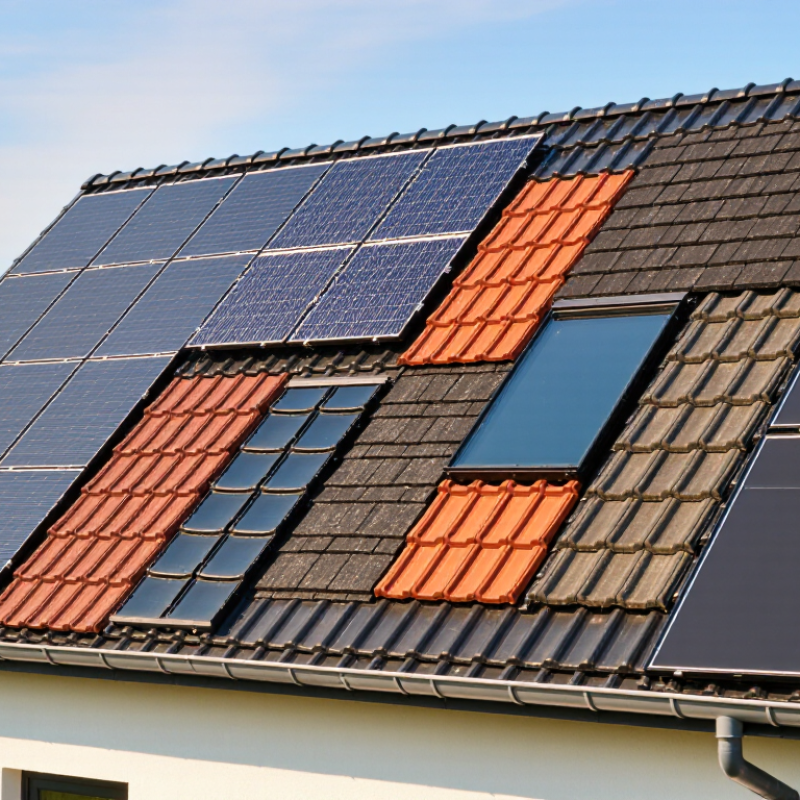
What Solar PV Roof Tiles Are and How They Generate Power
Top 10 Solar PV Roof Tiles for Global Buyers
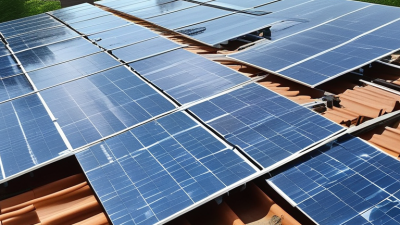
Solar PV roof tiles are building-integrated photovoltaic products. They replace, or sit alongside, conventional roofing materials. Each tile contains photovoltaic cells, protective glass, electrical conductors, and weather-resistant layers. Sunlight creates direct current inside the cells. An inverter then changes it into alternating current for household use. Extra electricity may flow to a battery or the public grid, depending on local rules.
The IEA Photovoltaic Power Systems Programme reported about 447 GW of new solar capacity worldwide in 2023. This rapid expansion increases interest in roof-integrated generation. Fraunhofer ISE’s Photovoltaics Report 2024 places leading commercial crystalline-silicon modules near 20–23% efficiency. Roof tiles may use similar cell technology, but their real output depends on spacing, ventilation, roof angle, and shade. Small shadows matter. A chimney can reduce production across several connected tiles.
In practical installations, buyers should inspect the tile’s rated power, temperature coefficient, fire classification, wind resistance, and replacement method. A qualified installer should also model annual sunlight, not only compare peak wattage. The U.S. National Renewable Energy Laboratory notes that photovoltaic output changes with irradiance, temperature, system losses, and orientation. A beautiful roof can still produce disappointing energy. I have found that design expectations often run ahead of measured performance. That gap deserves honest checking through monitoring data, maintenance access, and a realistic local electricity profile.
Top 10 Solar PV Roof Tiles for Global Buyers — What Solar PV Roof Tiles Are and How They Generate Power
Solar PV roof tiles are building-integrated photovoltaic products that replace or cover conventional roofing materials. Their semiconductor cells convert sunlight into direct-current electricity, which is then converted to usable alternating-current power by an inverter.
| Rank | Solar PV Roof Tile Type | Common PV Technology | Typical Rated Power per Tile or Unit | Typical Module Efficiency | Typical Product Size | Approx. Weight | Typical Temperature Coefficient | Expected Design Life | Key Buyer Considerations |
|---|---|---|---|---|---|---|---|---|---|
| 1 | Monocrystalline Interlocking PV Tile | Monocrystalline silicon cells | 45–80 W | 19–23% | Approx. 1,000–1,300 × 350–450 mm | Approx. 8–15 kg/m² | −0.29 to −0.40%/°C | 25–30 years | Good balance of efficiency, roof integration, availability, and long-term performance for residential pitched roofs. |
| 2 | Monocrystalline Flat PV Tile | Monocrystalline silicon cells | 50–100 W | 20–23% | Approx. 1,000–1,700 × 400–550 mm | Approx. 10–18 kg/m² | −0.29 to −0.40%/°C | 25–30 years | Suitable for modern flat-profile roofs where higher output per covered area is important. |
| 3 | Glass–Glass BIPV Roof Tile | Crystalline silicon cells between tempered glass layers | 50–110 W | 18–23% | Approx. 1,000–1,800 × 400–600 mm | Approx. 15–25 kg/m² | −0.29 to −0.40%/°C | 30 years or more | High durability and strong weather resistance; structural support and roof-load capacity must be checked. |
| 4 | Solar Slate-Format Tile | Monocrystalline silicon or thin-film cells | 30–70 W | 16–22% | Approx. 500–1,200 × 250–450 mm | Approx. 8–18 kg/m² | −0.25 to −0.40%/°C | 25–30 years | Designed to match slate roofing aesthetics and is often selected for renovation projects and heritage-style buildings. |
| 5 | Solar Shingle | Monocrystalline silicon cells | 35–80 W | 18–23% | Approx. 1,000–1,800 × 300–450 mm | Approx. 8–16 kg/m² | −0.29 to −0.40%/°C | 25–30 years | Provides a low-profile appearance and can be installed in overlapping rows, but installation labor may be higher than standard modules. |
| 6 | CIGS Thin-Film PV Tile | Copper indium gallium selenide thin film | 30–80 W | 13–19% | Approx. 1,000–2,000 × 300–600 mm | Approx. 8–18 kg/m² | −0.20 to −0.35%/°C | 20–30 years | Can perform relatively well in diffuse light and high temperatures; efficiency and supply options vary by product format. |
| 7 | Curved or Flexible PV Tile | Flexible CIGS or flexible crystalline silicon | 30–70 W | 12–19% | Approx. 1,000–2,000 × 300–600 mm | Approx. 3–10 kg/m² | −0.20 to −0.40%/°C | 15–25 years | Useful for lightweight roofs or curved surfaces; mechanical protection, fire rating, and attachment method require careful review. |
| 8 | Terracotta-Style PV Tile | Monocrystalline silicon cells integrated into ceramic-style roofing | 30–70 W | 17–22% | Approx. 400–1,200 × 250–450 mm | Approx. 12–22 kg/m² | −0.29 to −0.40%/°C | 25–30 years | Offers a traditional roof appearance; color, ventilation, roof pitch, and local tile-matching requirements affect energy output. |
| 9 | Semi-Transparent PV Tile | Crystalline silicon or thin-film cells with controlled light transmission | 20–60 W | 8–17% | Approx. 800–1,800 × 400–1,000 mm | Approx. 15–30 kg/m² | −0.20 to −0.40%/°C | 20–30 years | Can provide daylight and solar generation together; transparent area improves light transmission but reduces power density. |
| 10 | Polycrystalline Legacy PV Tile | Polycrystalline silicon cells | 40–75 W | 15–18% | Approx. 1,000–1,600 × 350–550 mm | Approx. 10–20 kg/m² | −0.35 to −0.45%/°C | 20–25 years | May offer lower purchase cost in selected markets, but generally requires more roof area than modern monocrystalline designs. |
Note: The figures are typical non-brand-specific commercial ranges. Actual output depends on solar irradiance, roof orientation, tilt, shading, ventilation, installation quality, inverter losses, and local building regulations. Rated power is measured under standard test conditions of 1,000 W/m² irradiance, 25°C cell temperature, and AM1.5 spectrum.
Related Posts
-
10 Best PV Tiles for Homes and Businesses?
-
10 Best Solar Power Roof Tiles for Global Buyers
-
Top PV Tiles for Global Buyers What You Need to Know
-

Exploring the Revolution: What are Solar Cell Roof Tiles and Their Benefits?
-
2026 Best Solar Panel Roof Tiles for Sustainable Energy Solutions?
-

Understanding Issues with pv tiles in Modern Construction