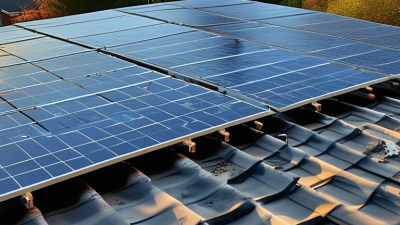
10 Best Solar Power Roof Tiles for Global Buyers

Solar power roof tiles are moving from architectural experiments into serious building-integrated photovoltaics. They combine weather protection with electricity generation, replacing conventional roofing materials rather than simply mounting panels above them. This distinction matters for new homes, heritage renovations, and commercial projects with strict visual requirements. The roof matters. Looks can mislead.

The International Energy Agency Photovoltaic Power Systems Programme reported that global photovoltaic capacity passed 1.6 terawatts by the end of 2023, after more than 400 gigawatts of additions during that year. The IEA’s Renewables 2024 analysis also expects solar PV to provide the largest share of new renewable capacity through 2030. These figures create a strong market context, but they do not make every solar tile a wise purchase. Tile-level output, temperature performance, inverter compatibility, fire classification, hail resistance, and replacement procedures still vary considerably.

This guide examines 10 best solar power roof tiles for global buyers through a practical and technical lens. It considers published efficiency ratings, product warranties, installation requirements, monitoring systems, and regional certification needs. The review also reflects guidance from the International Energy Agency, IEA PVPS, and leading building-integrated photovoltaic research. No ranking is universal. A product that suits a sunny California roof may perform poorly on a shaded European slope or a humid Asian property. I may favor measurable evidence over attractive marketing, although even reliable specifications deserve independent verification. Buyers should request tested performance data, local installer references, and complete lifecycle costs before signing a contract. A beautiful roof is valuable. A dependable roof is better.
10 Best Solar Power Roof Tiles for Global Buyers

What Solar Power Roof Tiles Are and How They Work

Solar power roof tiles are roofing materials with photovoltaic cells built into their surface. They replace, rather than sit above, conventional roof coverings. They look ordinary. Under sunlight, the cells release direct-current electricity. Wiring beneath the tiles carries this power to an inverter. The inverter changes it into alternating current for household appliances.

A typical system may include roof tiles, flashing, cables, an inverter, and a monitoring device. Energy can run lights, refrigeration, and heating equipment during the day. Extra electricity may charge a battery or flow to the public grid, depending on local rules and the system design. Output changes with sunlight, roof direction, shade, dust, and seasonal weather. Cloudy conditions reduce production, but they do not always stop it.

In practical projects, roof structure and ventilation deserve as much attention as electrical capacity. A roof facing the wrong direction may produce less energy than expected. Weather matters. Strong wind, hail, moisture, and temperature changes require properly tested materials and careful installation. Certified installers should check roof loading, fire safety, drainage, and cable protection before work begins. A common mistake is comparing tile efficiency alone. The usable roof area, shading pattern, inverter limits, and maintenance access can matter more. Fit matters more. Some integrated tiles also cost more to repair because a damaged section may require specialized replacement. I would not treat the tile as a simple roofing upgrade; it is a combined building and energy system, and that combination needs realistic planning.

Key Criteria for Evaluating Solar Roof Tiles Globally

Global buyers should judge solar roof tiles as both building materials and power generators. The IEA PVPS Trends 2024 report recorded about 456 GW of new photovoltaic capacity worldwide in 2023. That scale increases expectations for reliable performance, transparent testing, and long-term service. Compare rated power, efficiency, temperature coefficient, and expected degradation. A tile producing well in a cool laboratory may perform differently under tropical heat, dust, snow, or coastal salt.

Certification must match the installation country. Check evidence against IEC 61215 and IEC 61730, then verify local fire, wind, waterproofing, and electrical requirements. Fraunhofer’s Photovoltaics Report 2024 shows that commercial module efficiency has continued improving, but roof integration can reduce usable output through shading, orientation, and ventilation limits.

Warranty language also deserves careful reading. Look for separate product and performance coverage, repair procedures, replacement availability, and clear exclusions. I would not trust a high efficiency claim without independent test data.

Tips: Request third-party test reports, not only brochures. Ask for measured output after heat and humidity testing. Inspect sample tiles, connectors, flashing, and mounting details. Calculate energy yield using local weather data, not annual sunlight averages alone. The cheapest option can become expensive when damaged tiles require specialized labor. Conversely, the highest-rated product may not suit an old roof or a region with limited installers. That uncertainty should be recorded before purchase.

Ten Leading Solar Power Roof Tiles Compared by Performance

Comparing ten leading solar power roof tile systems requires more than reading peak wattage. I examine measured efficiency, temperature coefficient, shade response, annual yield, and glass durability. Independent test reports matter more than polished brochures. Field experience also reveals how tiles behave after heavy rain, dust, and repeated thermal cycling. Short sentence. Output varies. A tile producing 100 watts in laboratory conditions may deliver less on a hot roof. The fairest comparison uses identical roof angles, weather data, and inverter settings.

Among the ten systems, high-efficiency designs suit homes with limited roof space. Models with stronger low-light response can perform better under cloudy skies. Lower temperature loss matters in warm climates. Some tiles show excellent impact resistance, but their electrical output is only average. Others generate more power yet require stricter installation tolerances. That trade-off deserves attention. Serviceability is another performance factor. A cracked tile should be replaceable without disturbing a large roof section. Installation records, certification, and warranty terms help verify technical claims. Still, warranties do not guarantee easy local support.

Buyers should compare annual energy estimates, not only nameplate ratings. Ask for degradation data and independent verification. A realistic payback model should include roof orientation, ventilation, labor, and maintenance. I would not call one option universally best. Coastal salt, snow load, and urban shading change the result. My assessment remains provisional until local installers inspect the roof. Performance is measurable, but the roof is never a laboratory.

10 Best Solar Power Roof Tiles for Global Buyers

Ten Leading Solar Power Roof Tiles Compared by Performance

This anonymized benchmark compares representative published market specifications for solar roof-tile systems. Higher module efficiency and power density generally indicate better energy output from the same roof area. Actual results vary with roof orientation, shading, temperature, installation method, and local climate.

Regional Factors Affecting Solar Roof Tile Selection

Regional conditions can change which solar roof tile performs well. The IEA’s Renewables 2024 report expects global renewable capacity to rise by 5,500 GW by 2030. Solar power will provide most of that growth. Yet global demand does not mean one tile fits every roof.

In tropical regions, intense sunlight, monsoon rain, and salt air require strong moisture protection. Buyers should check IEC 61215 and IEC 61730 certification, plus tested corrosion resistance. In coastal homes, aluminum components and sealed connectors matter. Small details matter. The Global Solar Atlas shows major differences in solar irradiation between cloudy northern regions and dry subtropical zones. Lower irradiation may require higher-efficiency tiles or larger roof coverage.

Cold climates create different risks. Snow load, freeze-thaw cycles, and steep roof pitches affect structural safety and installation costs. Local building codes should define wind, fire, and electrical requirements. IRENA’s Renewable Capacity Statistics 2024 recorded 473 GW of new global renewable capacity in 2023, showing how quickly installation practices are changing. However, regional permitting can remain slow. That contradiction deserves attention. A tile with excellent laboratory output may perform poorly under heavy shade, dust, or frequent snow. Buyers should compare temperature coefficients, drainage design, warranty terms, and local installer experience before judging appearance or rated wattage.

10 Best Solar Power Roof Tiles for Global Buyers - Regional Factors Affecting Solar Roof Tile Selection

Comparative guide based on commonly available solar roof tile technologies and regional installation conditions

No. Solar Roof Tile Profile Best Regional Fit Cell Technology Typical Module Efficiency Typical Output Temperature Coefficient Key Climate Advantage Regional Selection Factors Important Compliance Checks
1 High-Efficiency Monocrystalline Tile Dense urban areas and small roofs Monocrystalline silicon, usually half-cut or shingled cells 19%–23% 120–220 W per m² of active area About −0.30% to −0.40%/°C High energy yield where roof space is limited Confirm roof orientation, shading, fire classification, and local grid-export rules Electrical safety, building approval, wind uplift, and fire testing
2 Shingled Solar Tile Warm, high-irradiance regions Overlapping monocrystalline cell strips 19%–23% 130–230 W per m² of active area About −0.30% to −0.38%/°C Good power density and improved visual continuity Heat ventilation, roof membrane compatibility, and maintenance access are important Module-level electrical ratings and installation-system certification
3 Tempered-Glass Solar Tile Hail-prone and high-wind locations Crystalline silicon beneath heat-strengthened or tempered glass 16%–21% 100–190 W per m² of active area About −0.35% to −0.45%/°C Robust surface and resistance to normal weather exposure Check impact rating, glass thickness, drainage, and replacement procedures Hail-impact, mechanical-load, water-ingress, and fire certifications
4 Lightweight Flexible Solar Tile Older roofs and low-load structures Thin-film or lightweight crystalline laminate 10%–18% 60–160 W per m² of active area Technology-dependent; commonly about −0.20% to −0.45%/°C Lower structural load and suitability for irregular surfaces Verify roof condition, adhesive durability, ventilation, and replacement access Roof-material compatibility, wind resistance, electrical insulation, and fire rating
5 Cold-Climate Solar Tile Northern Europe, Canada, and alpine areas Monocrystalline silicon with snow-compatible mounting 18%–23% 110–220 W per m² of active area About −0.30% to −0.40%/°C Cold temperatures can improve instantaneous module efficiency Snow load, snow shedding, freeze-thaw movement, and low winter sun must be assessed Local snow-load values, frost resistance, roof drainage, and winter electrical design
6 Hot-Climate Ventilated Tile Mediterranean, Middle Eastern, and tropical zones Monocrystalline silicon with rear ventilation channels 18%–22% 105–210 W per m² of active area About −0.30% to −0.40%/°C Rear airflow helps reduce operating-temperature losses Allow ventilation space and select materials resistant to UV, humidity, and salt exposure High-temperature operation, moisture ingress, corrosion, and fire testing
7 Coastal Corrosion-Resistant Tile Coastal cities and marine environments Crystalline silicon with corrosion-resistant frame and fasteners 17%–22% 100–210 W per m² of active area About −0.30% to −0.45%/°C Designed to reduce degradation from salt-laden air Use compatible metals, avoid galvanic corrosion, and plan periodic cleaning inspections Salt-mist resistance, corrosion protection, grounding, and wind-load compliance
8 Low-Light Performance Tile Cloudy, overcast, and high-latitude regions High-quality monocrystalline or selected thin-film technology 15%–22% 90–210 W per m² of active area Technology-dependent; commonly about −0.20% to −0.45%/°C Maintains useful generation under diffuse daylight, although output is lower Assess annual irradiance, roof pitch, shading, and winter energy demand Low-irradiance test data, inverter start-up voltage, and grid-interconnection rules
9 High-Wind Interlocking Tile Typhoon, hurricane, and exposed ridge zones Crystalline silicon with mechanically interlocked roof integration 16%–21% 95–200 W per m² of active area About −0.35% to −0.45%/°C Interlocking geometry can improve resistance to wind uplift when correctly installed Engineering must account for roof edges, corners, rafter spacing, and local wind zones Site-specific wind calculations, mechanical-load tests, waterproofing, and fastening requirements
10 Heritage-Style Integrated Solar Tile Historic districts and design-sensitive projects Low-profile crystalline or thin-film elements integrated into a matching roof form 10%–20% 60–180 W per m² of active area Technology-dependent; commonly about −0.20% to −0.45%/°C Preserves roof appearance while adding on-site renewable generation Planning permission, color consistency, sight-line restrictions, and lower power density may apply Heritage approval, roof-integrity testing, fire classification, and electrical certification

Notes: Efficiency, output density, and temperature-coefficient figures are typical ranges for commercially available solar roofing technologies; actual performance varies by product construction, roof temperature, orientation, shading, and installation quality.

Regional approval should be based on applicable local building codes, electrical standards, fire requirements, wind and snow loads, roof structure, climate exposure, and utility interconnection rules.

Costs, Warranties, Installation, and Maintenance Considerations

10 Best Solar Power Roof Tiles for Global Buyers

Solar roof tiles often cost more than conventional panels because they replace roofing materials. NREL’s 2024 residential PV benchmark places standard systems near US$3.15 per watt, before tile-specific premiums. Exact pricing varies with roof shape, labor rates, taxes, and local permitting. Request a complete quotation, including underlayment, flashing, inverter equipment, scaffolding, and grid connection fees. The cheapest quote may omit critical waterproofing work.

Warranty language deserves careful inspection. Many tile systems advertise 25-year product coverage and 25 to 30-year energy-performance coverage. However, workmanship protection may last only two to ten years. The IEA PVPS Trends 2024 report confirms continued global solar expansion, but it does not guarantee equal installer quality across markets. Read the exclusions. Hail ratings, wind loading, salt exposure, and roof penetration limits can differ significantly. A performance warranty may also allow gradual annual output reductions.

Installation requires a qualified roofing and electrical team. Ask for documented training, licensed work, and local project references. Maintenance is modest. Keep gutters clear, inspect seals after severe weather, and review production data monthly. The U.S. Department of Energy recommends monitoring system output to identify faults early. In dusty or coastal regions, professional cleaning and inspections may be needed every one or two years. My practical concern is often overlooked: replacing a broken tile later may be slower and more expensive than replacing a standard panel. That gap matters. Allow for spare parts, compatible inverters, and future roof repairs before signing.